

Fat Loss vs Weight Loss: What’s the Difference?
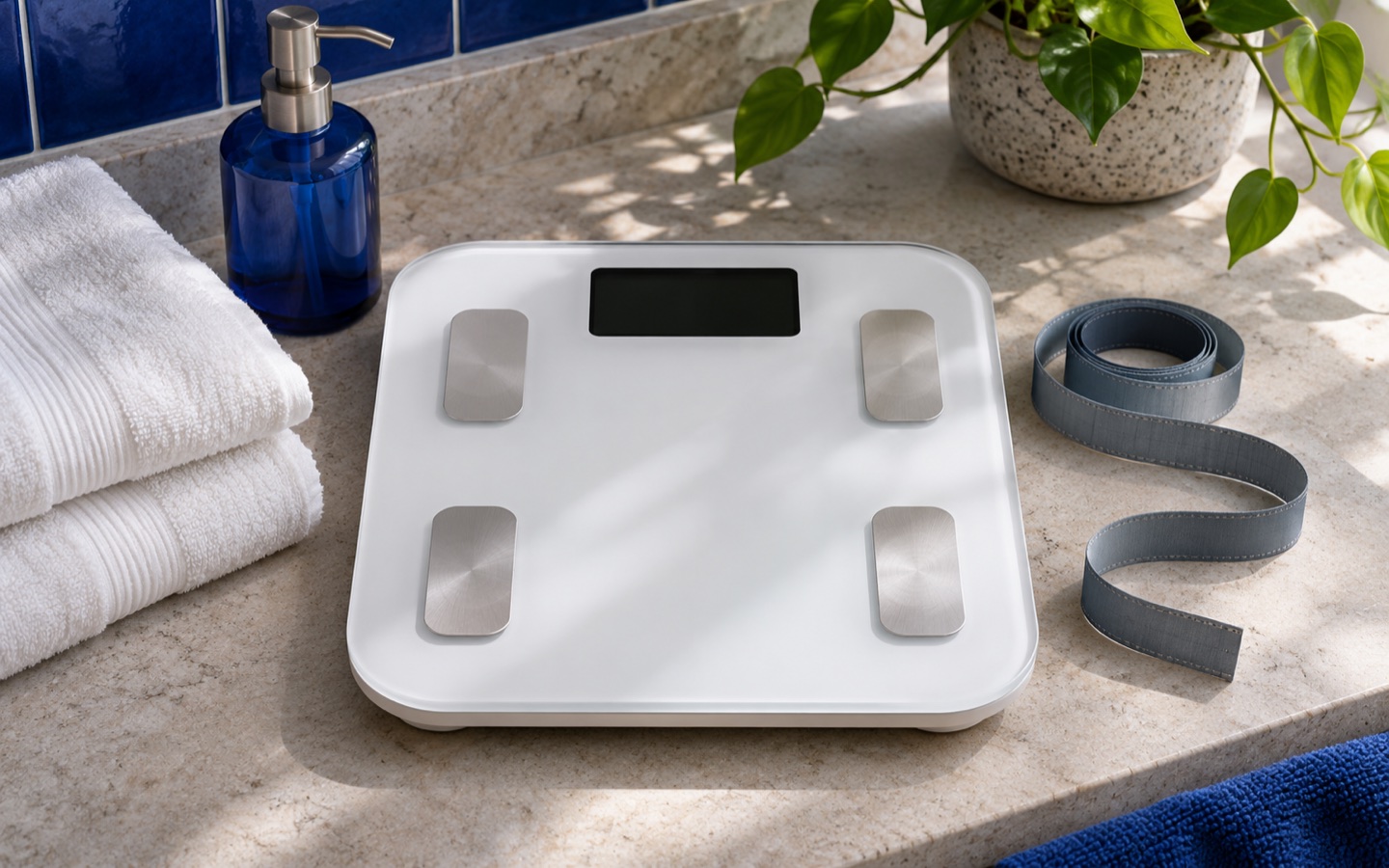
The scale gives you one straightforward number. It doesn’t show what changed inside that number or how your strength is progressing.
By Murad Murad · Nutrition & Fat Loss
The short answer
Weight loss is a reduction in total body mass. Fat loss means a reduction in body fat. The scale also reflects lean tissue, water and food in your gut. A trend over time, interpreted alongside waist measurements and performance, tells you more than any single weigh-in. [1] [2]
Understand changes that happen quickly
Think about a week in which you travel, eat differently or change your training. Even if your routine has broadly stayed on track, the scale may shift. Energy-balance research accounts for body composition and changes in energy expenditure over time, which is why the scale is a weak short-term estimate of fat change. [1]
Pick measures you can repeat consistently
If waist measurements are useful to you, measure at the same place, at a similar time, using the same technique. NICE gives a method for measuring waist circumference. Use the trend as additional context, without trying to translate each centimetre into kilograms of fat. [2]
For training, choose a few repeatable movements and review repetitions, load and technique. A lifting log can show progress while the scale is fairly stable.
Options at a glance
- S · What it tells you: c · Common limitation: a
- D · What it tells you: i · Common limitation: r
- F · What it tells you: l · Common limitation: u
Read the measures together
A long-term fall in weight alongside a smaller waist suggests a different trend from one low reading followed by a return to normal. If weight falls quickly while energy and training performance get worse, review how sustainable the approach is and consider getting guidance. Trends vary, and these measures cannot establish body composition precisely.
If tracking weight or measurements causes distress or encourages restrictive eating, step away from those measures. Strength, energy and how comfortable daily activities feel can give you useful information. Speak to a GP or registered dietitian if you have a history of disordered eating or are worried about your relationship with food. Activity and a balanced diet can benefit health even when weight is stable. [3] [4]
Choose the outcome you actually want
If your goal is to get stronger while losing some fat, keep an appropriate resistance programme in view and make changes you can sustain. If you are losing weight unintentionally or have symptoms that concern you, seek medical advice rather than using a fitness tracking plan to interpret them.
Explore online coaching from MuradFitness.
Frequently asked questions
Can the scale stay the same while my shape changes?
Yes. Total mass can remain similar while its components change. Treat changes in measurements and training performance as useful clues.
Should I rely on a home body-fat scale?
Use it cautiously as a rough trend if you find it helpful. A single reading is too uncertain to justify a change to your plan.
Sources and references
- Hall et al. — Quantification of the effect of energy imbalance on bodyweight
- NICE NG246 — Assessing overweight, obesity and central adiposity
- NICE NG246 — Physical activity and diet
- Currier et al. — ACSM position stand on resistance training prescription in healthy adults (2026)
About the author
Founder of MuradFitness. Qualified personal trainer since 2016; BSc in Physiotherapy, completed in 2018. Coaching experience informs the practical context of these guides.
Your next step
Tell me about your training, routines and goals. We can discuss what online coaching could help you put into practice.
Related guides